"The ACA has been a great support": World Cup Pioneer on the "tangible" Impact of Member Services
21 July, 2025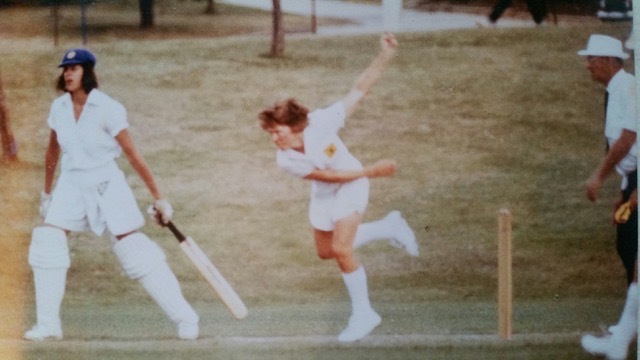
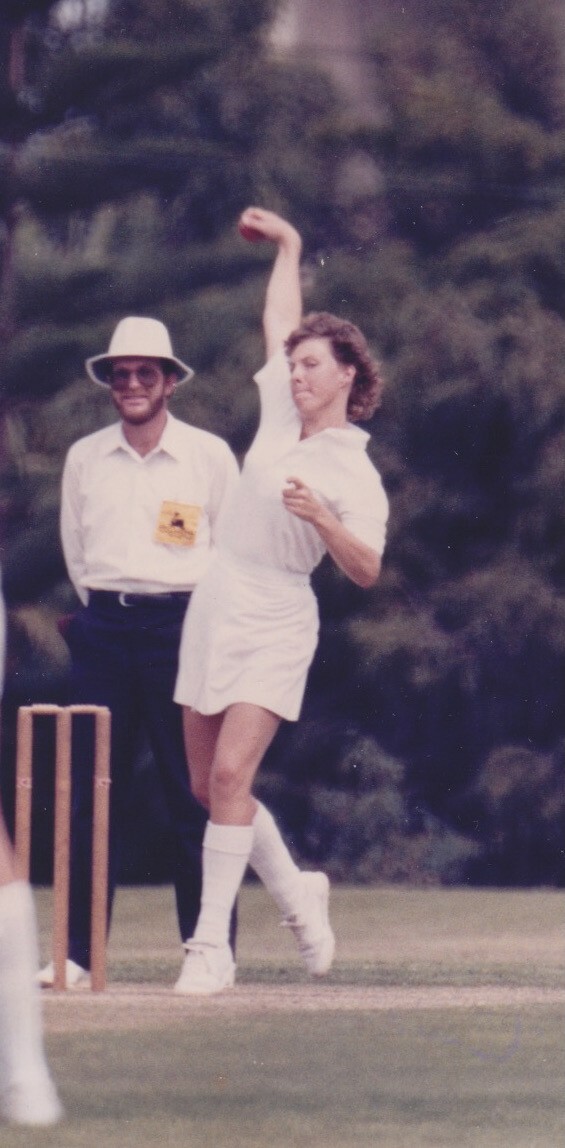
Western Australian-born trailblazer Jenny Owens bowled pace against Australia as a member of the International XI at the landmark 1982 World Cup. To earn her first Baggy Green, she bowled spin in secret, and eventually played an Ashes Test at Lord’s. Having seen the game from multiple perspectives, Owens is proudly fostering the next generation of female players with the ACA.
Subiaco-born cricketing pioneer Jenny Owens had waited her whole life to play international cricket, and it was a dream come true for that debut to come at the 1982 World Cup, which was held in New Zealand.
The twist? Owens’ first international tournament saw her come up against Australia, as the then 19-year-old was selected for the International XI team, which was held to ensure the competition had an even number of teams, as well as grant more female players exposure to world-class cricket.
“We had maybe two Indian girls (Sandra Braganza and Renuka Majumder), two from Holland (Ingrid van der Elst and Babette van Teunenbroek), and our captain was Lynn Thomas, who was an English player from Wales,” says Owens.
Australians who joined Owens on the team were Lynley Hamilton and Rhonda Kendall. The trio experienced their most surreal moments in the International XI’s third match, against Australia, when they were confronted by their domestic teammates and close friends.
“It was very weird,” says Owens, recalling that game, held at Palmerston North. “They had five Western Australians: Karen Read, Terri Russell, Denise Alderman, Peta Verco and Denise Martin.
“Denise [Alderman] was one of my best friends,” says Owens. “I played in the same state team and same club team as Denise. It was rather funny, playing in a World Cup and bowling against her.”
A spritely medium-pacer, Owens took the wicket of fellow West Australian Verco and scored 21 not out against the Australian bowling attack, but her International XI team lost the encounter by 64 runs.
“We had a great time and it was amazing,” says Owens. “It was a great initiative by the organisers, realising that no team wants to sit out and have a bye.”
Australia would famously go onto win that World Cup, defeating England by three wickets in the final. Owens, watching on, would have to bide her time before playing for her country.
A funny thing happened on the way to Owens’ debut for the Australian cricket team. “One day at club training, I was mucking around and realised I could naturally spin the ball both ways,” says Owens.
She had bowled off-spin on occasion, but her leg-break was an entirely new weapon in her bowling arsenal, unseen by her opponents, or anyone else within the Australian cricketing set-up. The plan was soon made to keep it that way, as the Western Australian team was preparing for the Ruth Preddy Cup.
Owens recalls the Western Australian coach looking for something extraordinary to unseat a dominant New South Wales team, came to her and said: “Look, none of the other states know that you can bowl spin, and I don't want you to bowl spin at camp at all.”
The surprise tactic worked perfectly. In the first match of the competition, Western Australia faced New South Wales and Owens’ leg-breakers earned her the match-winning figures of 7/54.
Western Australia would go on to win their first ever Ruth Preddy Cup, too. “That was actually a stroke of genius, to be fair,” says Owens. “It was obviously a team effort for the whole tournament.”
It also put Owens forward to the Australian selectors not as a pace bowler, competing to earn a place in a stacked side with Sharyn Fitzsimmons, Raelee Thompson, Sharon Tredrea, Denise Martin, but as a spinner, a crucial point of difference.
“I still remember the day, going to the post [office box],” says Owens. “Opening up this letter from the AWCC, [the Australian Women's Cricket Council], as it was then, and seeing, ‘Congratulations, you're in a touring party to the UK.’”
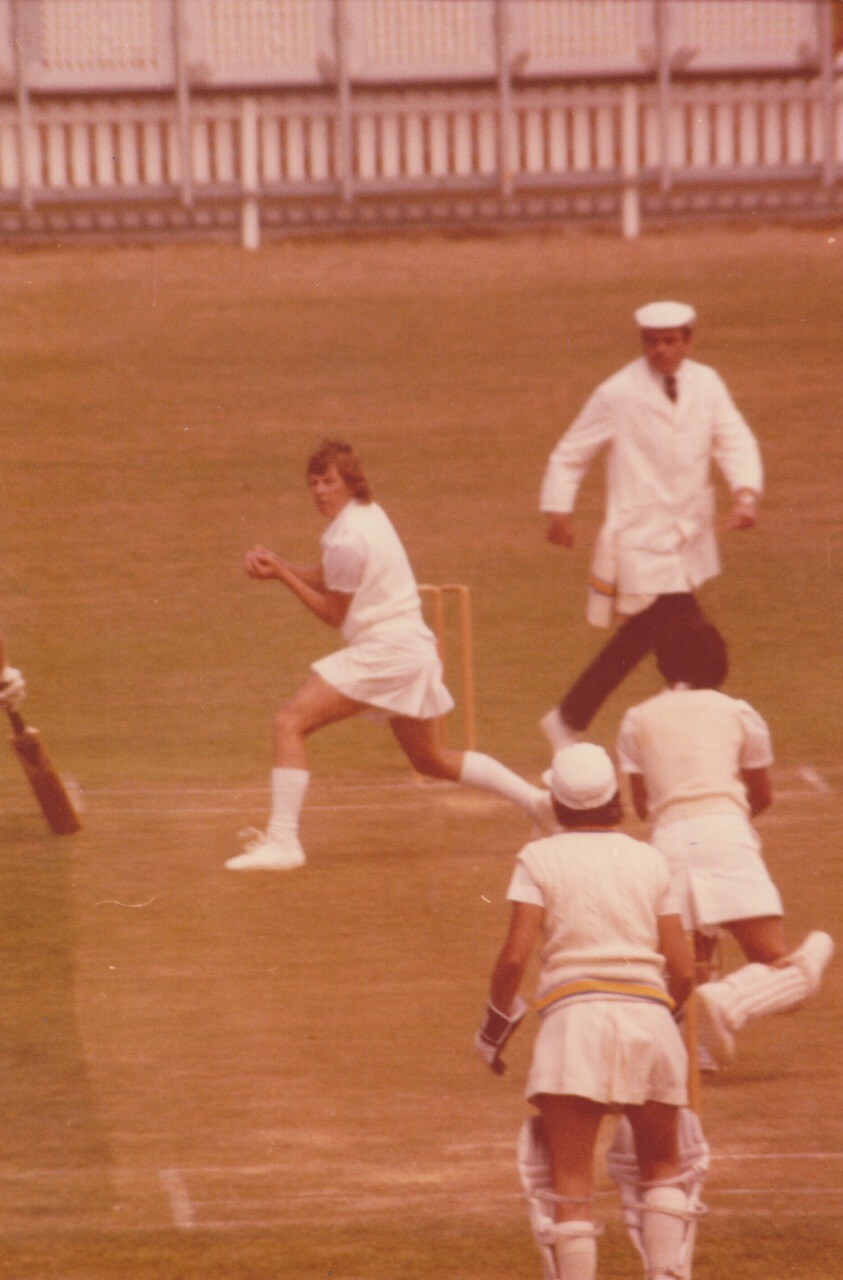
It opened up a new world for Owens, who would go onto play three Tests and 15 One Day Internationals for Australia. Over the three-month tour, lasting from June to August, Australia went undefeated and Owens took 42 wickets, the most of any player. She says a particular highlight was the Test at Lord’s.
“To be walking through the long room at Lord’s and stand on the balcony and look up to your left and there’s Father Time and things that I’d seen on telly as a youngster," says Owens. “That was definitely an amazing experience.”
Fortunately, these are memories that Owens relives every year on “really special days” with her teammates at ACA Member Functions. “I look forward to the annual day at the cricket hosted by the ACA,” says Owens. “Where we can have a bit of a reunion with past players, male and female."

Growing up in an era when schools had a boys’ playground and a girls’ playground, and Owens had to jump fences to get to the cricketing nets, she is taken aback by how far the women’s game has evolved.
“They can [now] get paid as professionals and do it for a living, there’s so many pathways for kids,” she says. “Cricket's still very much a part of my life and I’ve been very fortunate and very thrilled in the last sort of 10 years, especially to be able to give something back in a volunteer capacity to the game.”
Owens has achieved a lot of this with the support of ACA, reconnecting her to the grassroots of the game, where she has helped foster a younger generation of players.
Owens has also remained a fixture of the ACA’s Health Check Days, which she stresses are essential as retired players with healthy lifestyles are not immune to health problems “coming out of the blue and ending badly”, noting that sad reminders of this have persisted in the last few years.
Owens says the Thriving Member Grants provides “tangible things”, like assistance for gym memberships and hospital visits. ACA members should not “underestimate their value” to the next generation, according to Owens, and the fitter they are, the better prepared they are to pass on that acquired know-how.
“The ACA has been a great support for past players, harnessing the skills and the knowledge that some of the past players have, then they’re able to pass that information on and assist people that are playing the game now,” says Owens.
She is extremely passionate about the mentoring from the skills development aspects, and her increasing role as a spin-bowling specialist, which was a direct coaching pathway she didn’t have in her own youth.
“I think it’s amazing, the transition that’s happened,” says Owens. “It took a long time.”